Things to do nearby: a desert, a river and two wine routes
Abanilla sits in the north-east of the Region of Murcia, between Fortuna, Jumilla and the province of Alicante. It is not a place you pass through: you have to come on purpose, which is why it is still what it is. Here is what makes the trip worth it.
The village
You climb Abanilla’s old centre on foot, and two things take you by surprise.
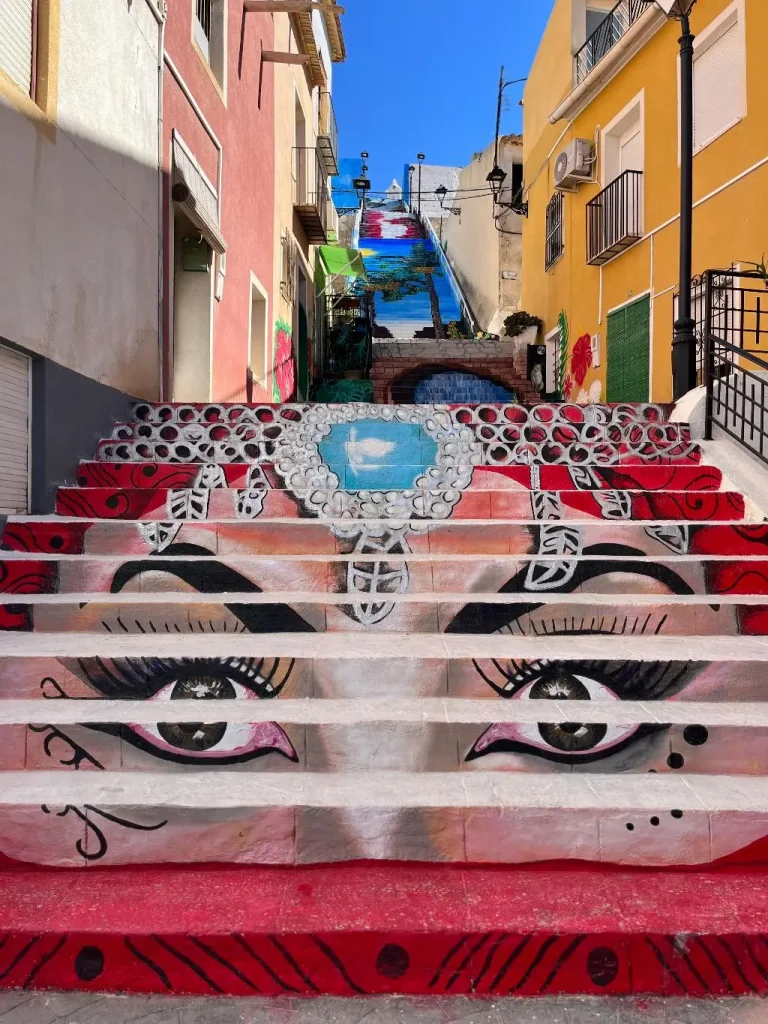
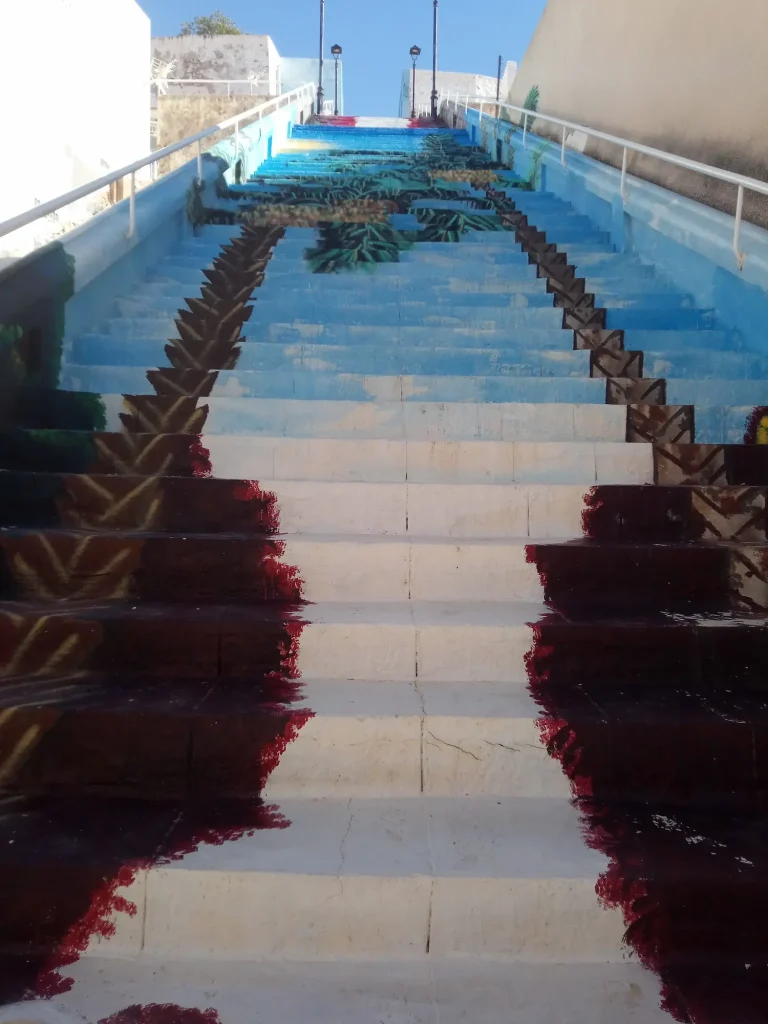
First, the painted steps. A mural runs up several flights: a woman’s face at the bottom, looking down at whoever climbs, and higher up palm trees on a blue ground. You only see it whole from the foot of the stairs, which makes you stop.
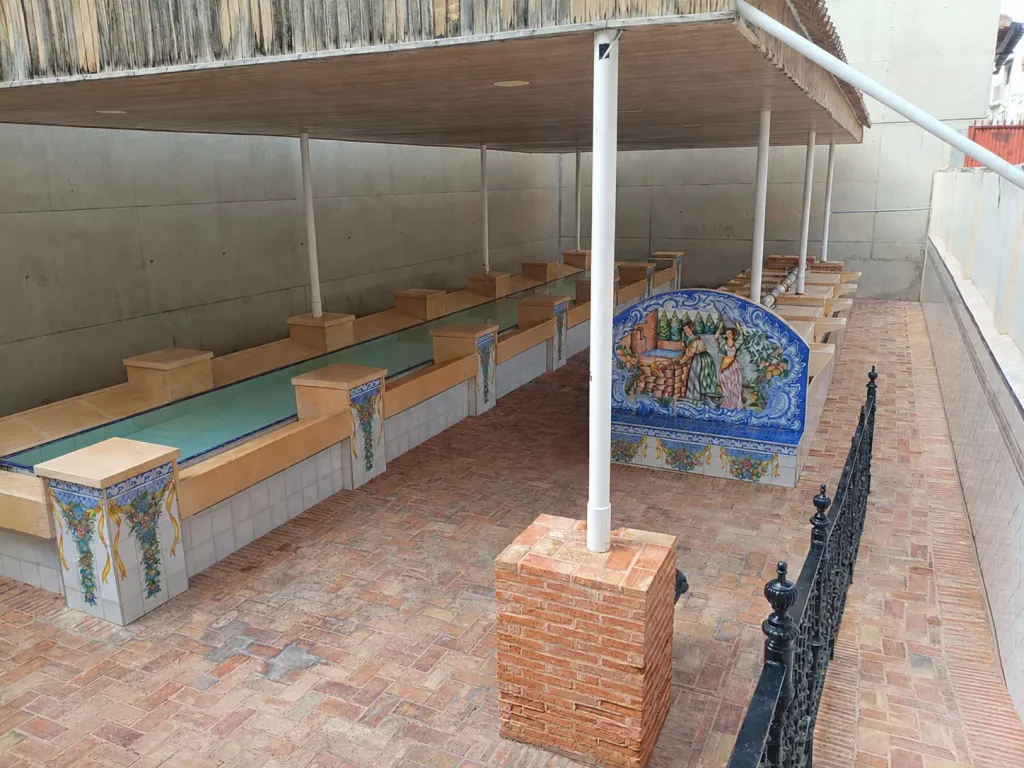
Then the washhouse, restored, its stone basins lined up under the roof and a tiled mural at the end. This is where the village did its laundry, and it was kept rather than pulled down.
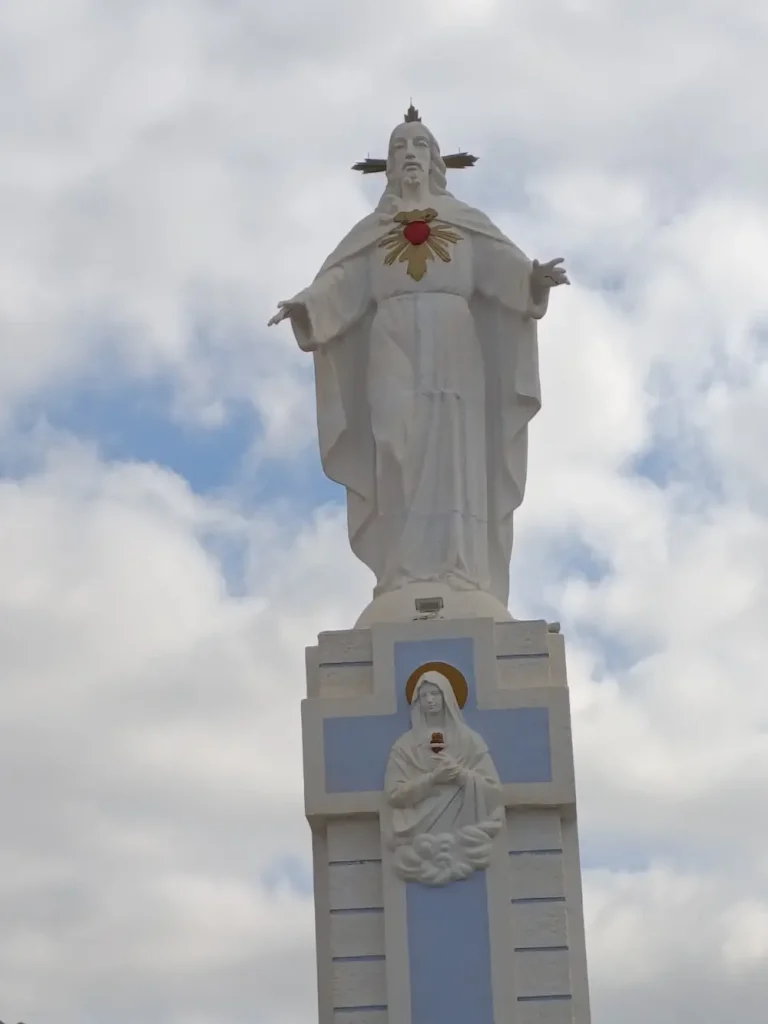
And above the village, the Sacred Heart, white against the sky, the Virgin on its pedestal. Not to be confused with the one at Barinas, which is a different one.
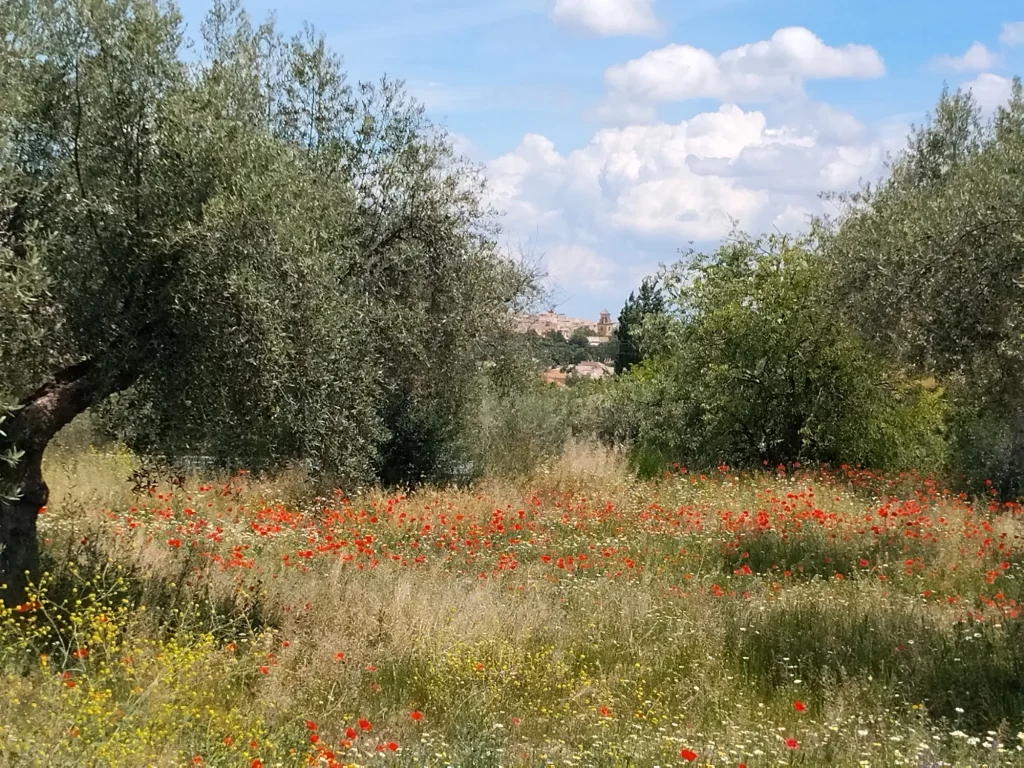
Almond blossom
From late January to March. The bare hills turn white and pink for a few weeks, and then it is over. It is the finest time of year, and the least known.
A desert and a river, one on top of the other
What sets Abanilla apart is having both, stacked: a desert of gullies that was a sea floor four million years ago, and underneath it a river that runs all year, with palm groves and pools you can swim in.
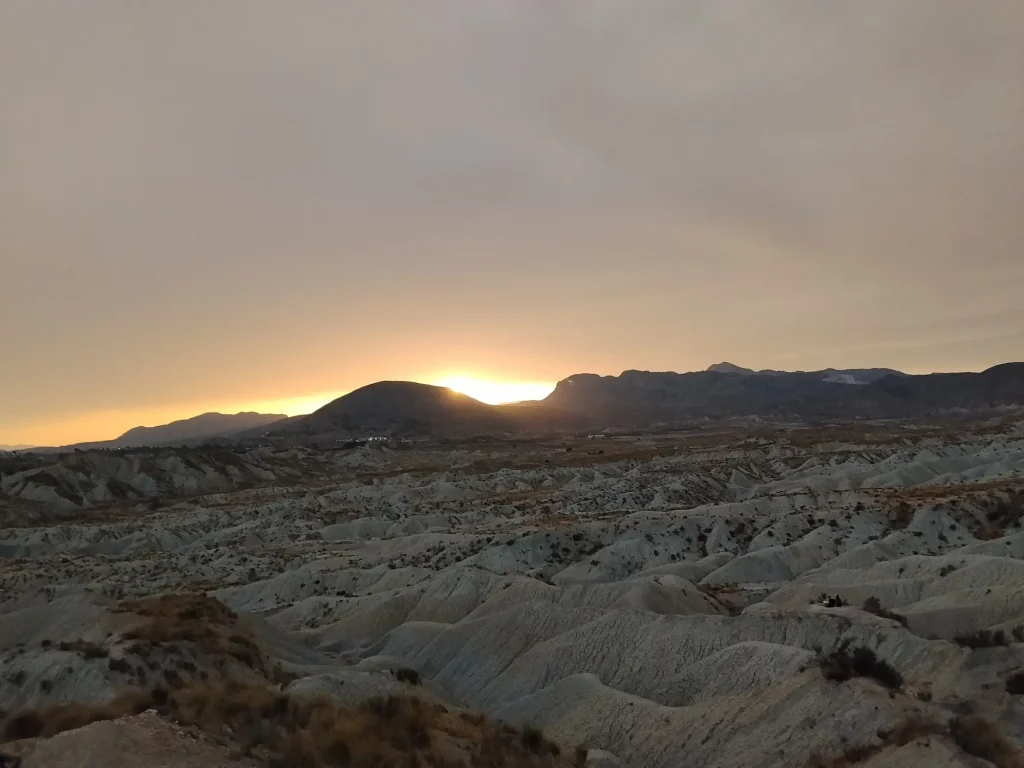
The Mahoya desert is white and grey marl, cut into ravines by centuries of rain. Everyone calls it lunar. Go early or late: with the sun high the relief flattens out and disappears.
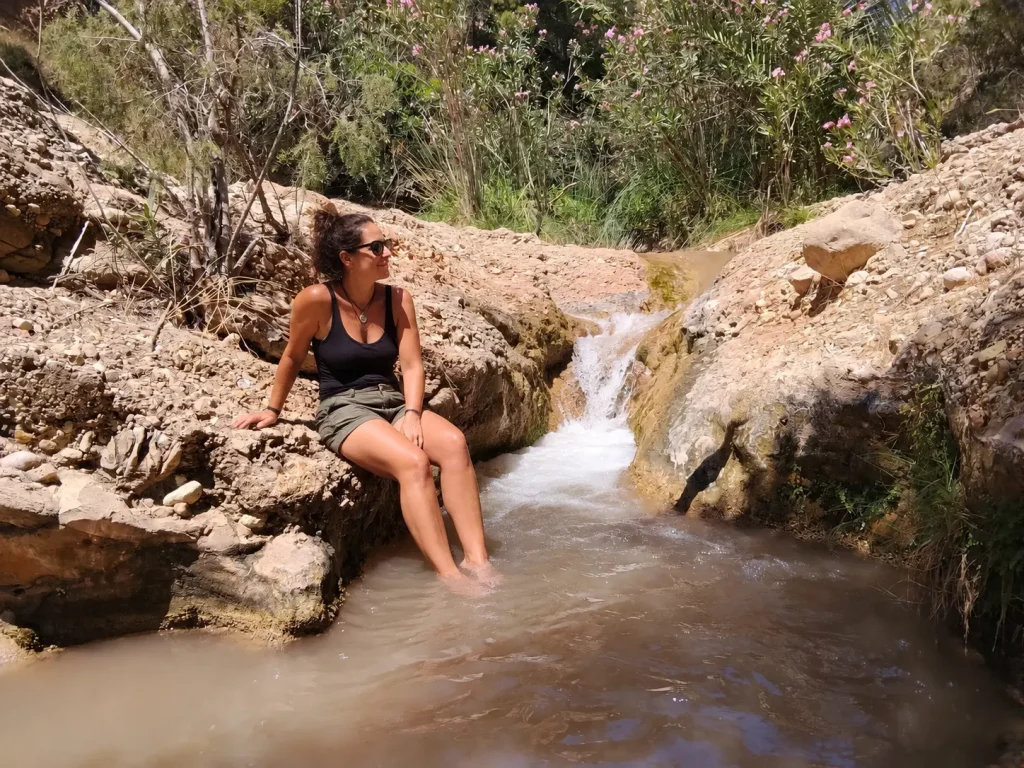
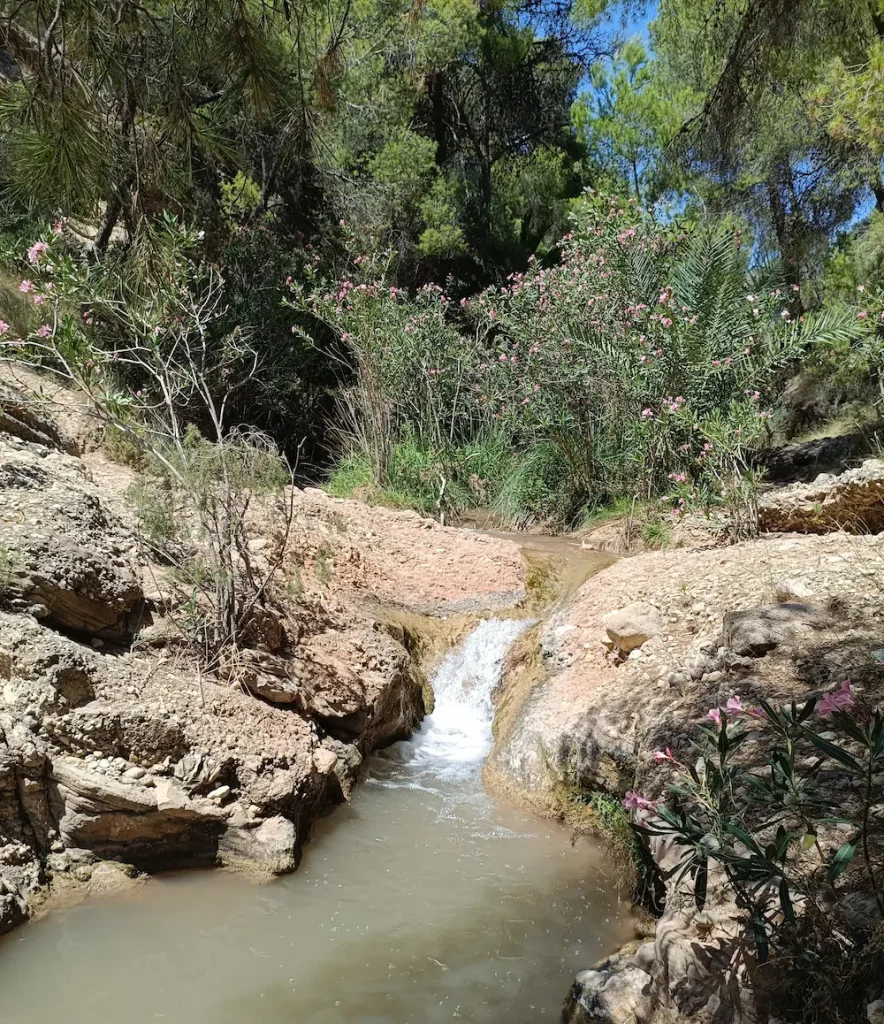
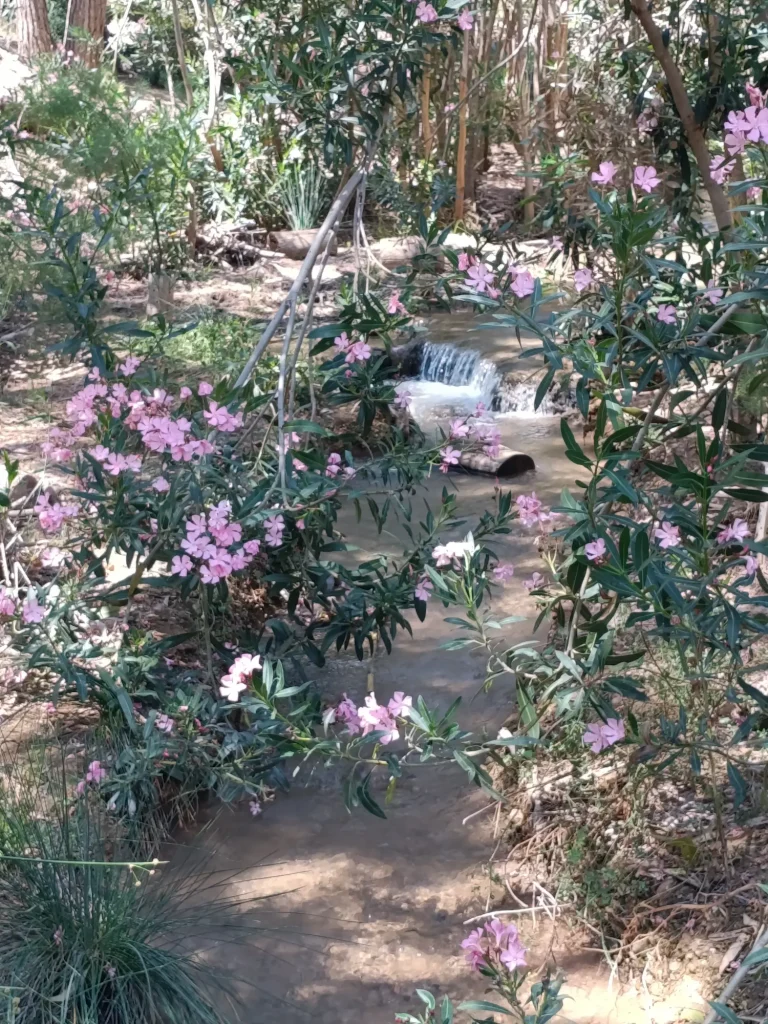
The río Chícamo runs below, through the El Cajer canyon. Much of the path is walked with your feet in the water — the riverbed is the trail. There are pools, small, cold and clear, and oleanders in flower from May to September. The ravines here hold the largest concentration of rambla palm groves in the whole Region of Murcia.
Pinoso, over in the Alicante area — 15 minutes
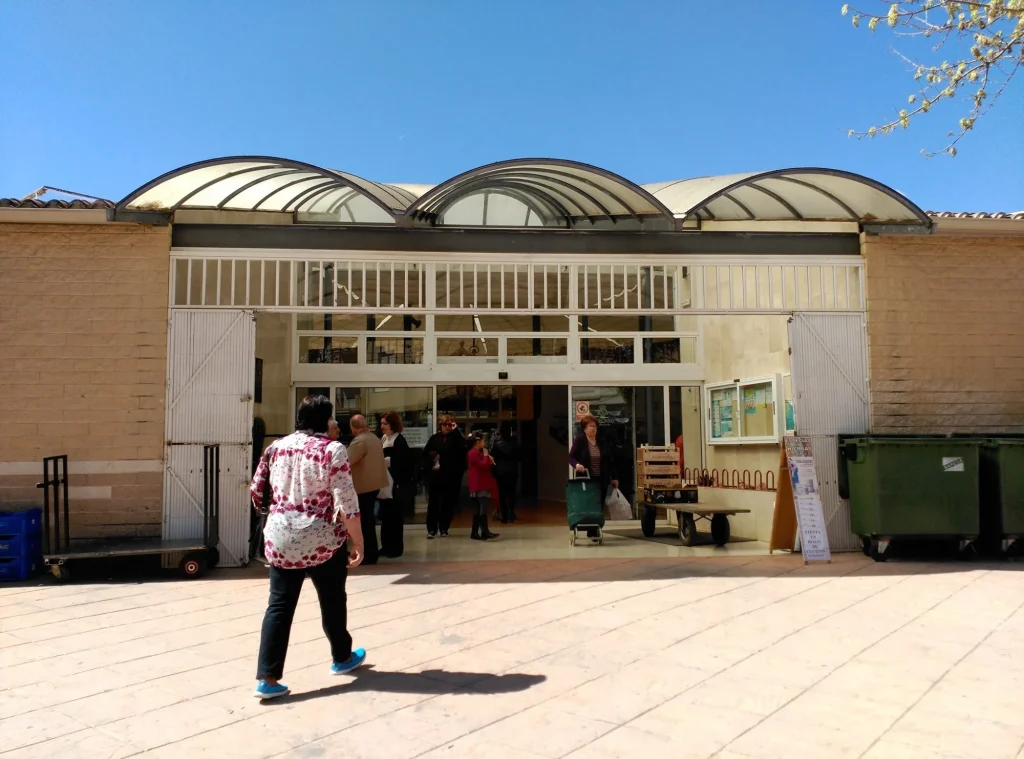
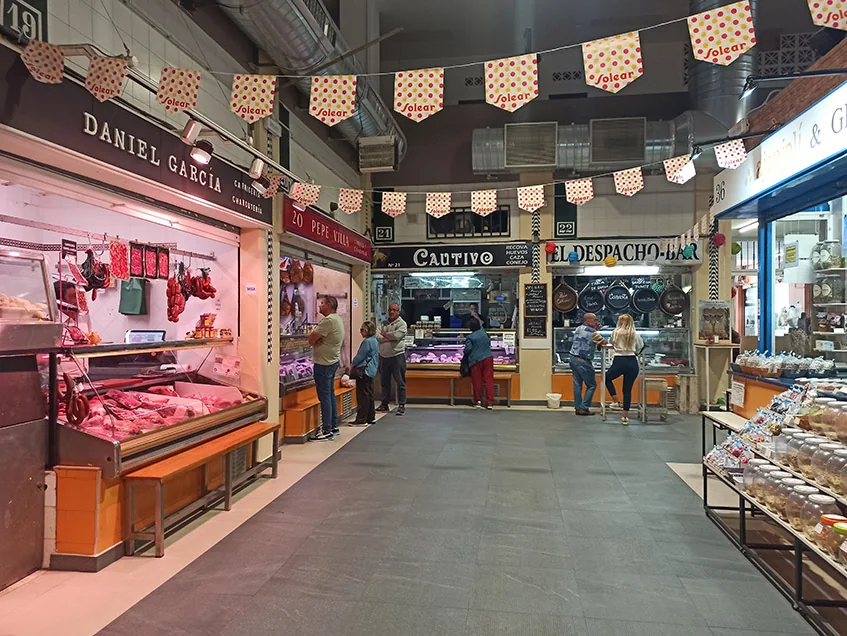
A quarter of an hour and you change province: Pinoso, El Pinós, is already Alicante. You go for the Saturday morning market under the covered hall, and for something that exists almost nowhere else.
The Cabezo de la Sal is an 893-metre hill made not of rock but of rock salt and gypsum — a Triassic salt dome, one of the finest examples in Europe. Salt has been cut from it since antiquity. And on Monte Coto are the cream marfil marble quarries, the largest in the province.
You walk the town along cobbled streets, with the church of San Pedro at the top of its steps: a clock tower, a wrought-iron belfry and a dome of blue glazed tile.
The Sierra de la Pila — under half an hour
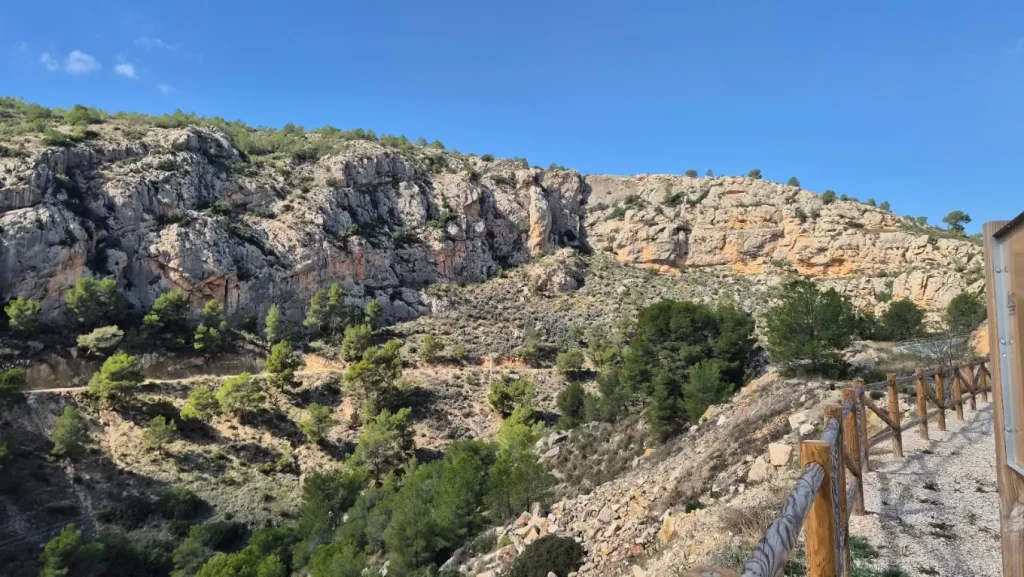
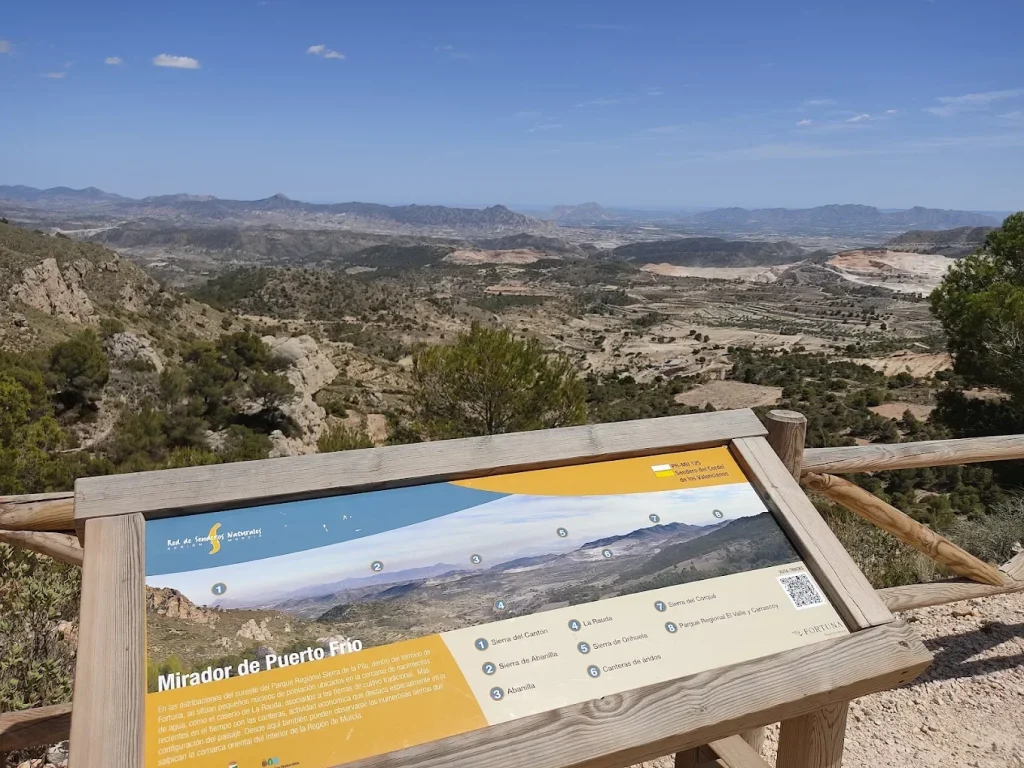
A Regional Park since 1992, more than 8,000 hectares of pine woods on a limestone range. The paths are waymarked and the junctions signposted: Pico de Los Cenajos, Cerro del Pino de La Muela, Fuente La Higuera. The Mirador de Puerto Frío you reach by car, and a panel names what you are looking at.
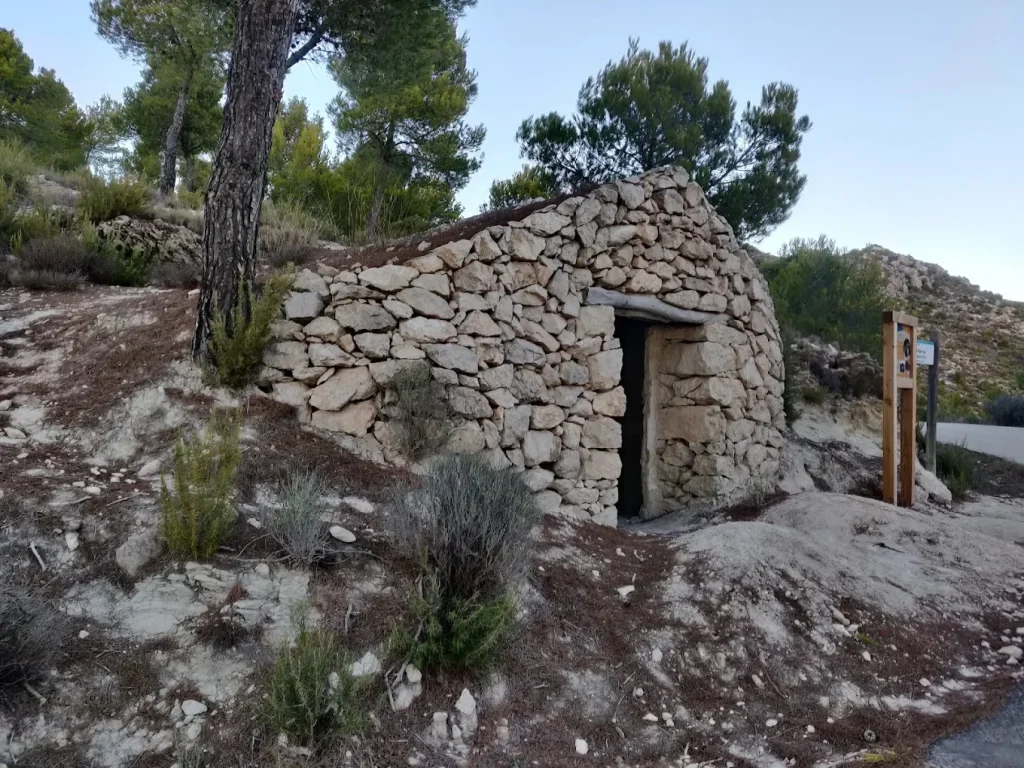
There are dry-stone shelters, open to anyone, and the Pozos de la Nieve, wells where snow was packed in winter to be carried down to Murcia in summer. October to May is the season. Carry water: the springs are not reliable all year.
Murcia, 35 kilometres away
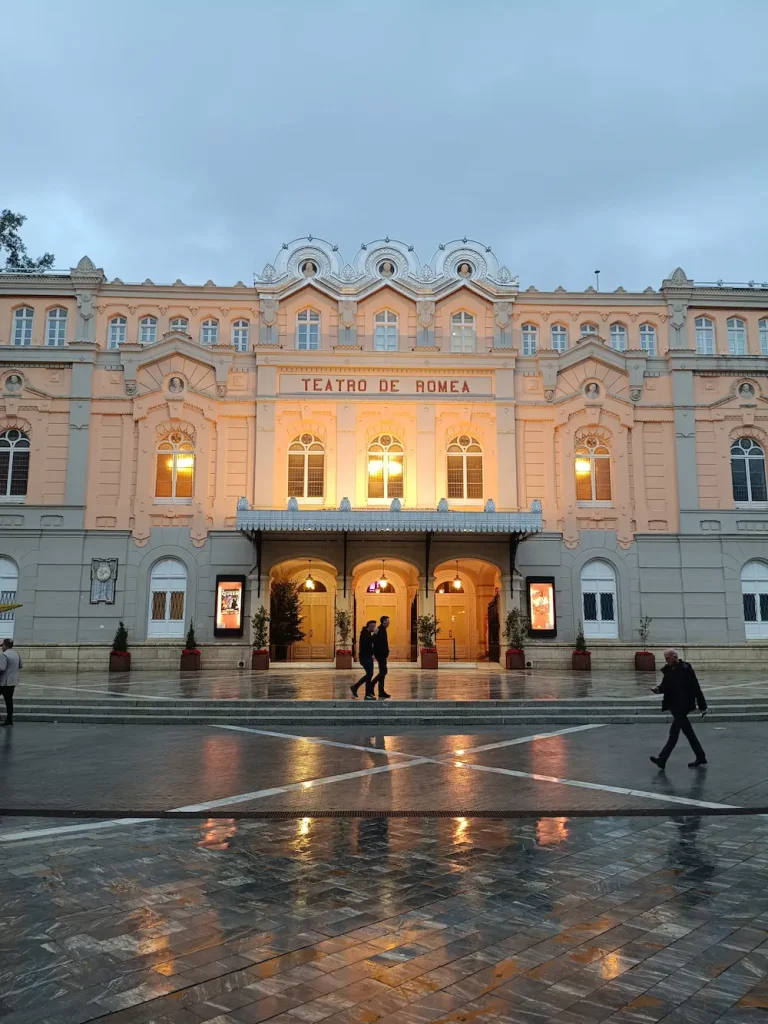
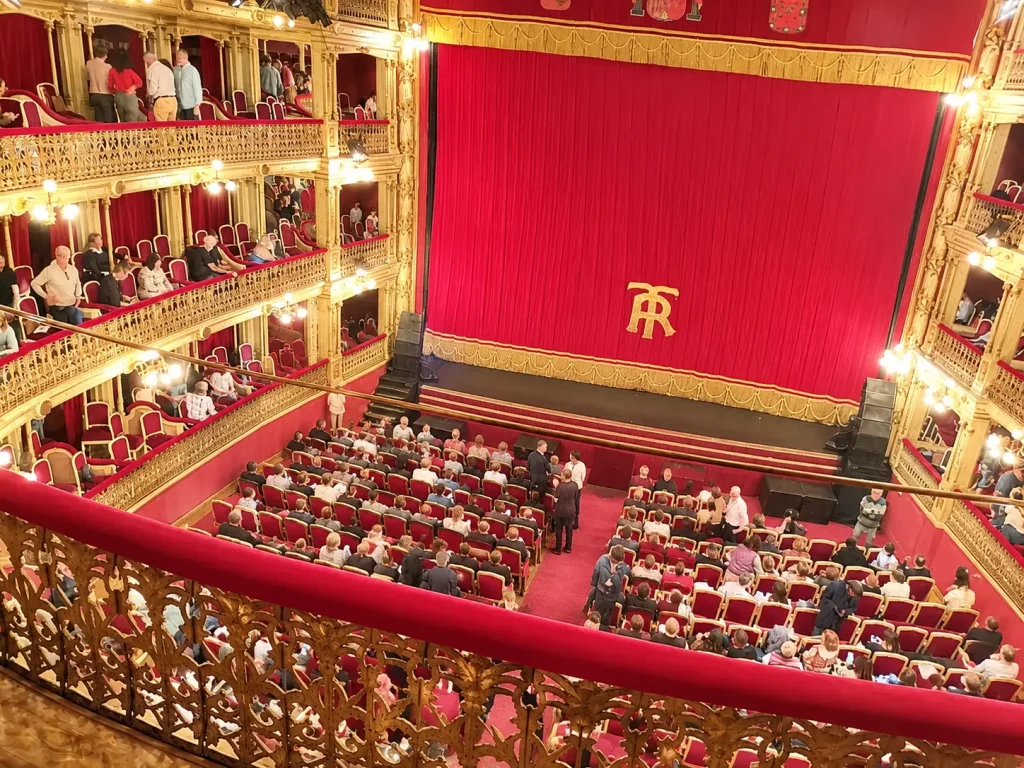
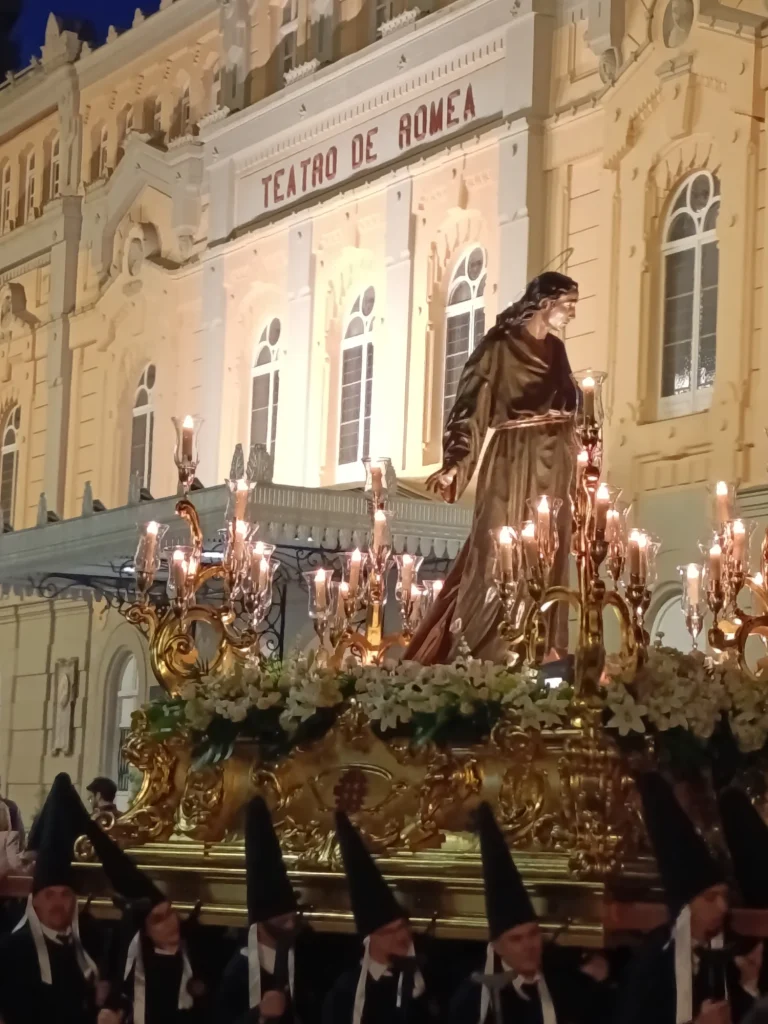
Half an hour by car. The cathedral, the plaza de las Flores, the old town, and the Teatro Romea, running since 1862.
On calle Trapería stands the Real Casino, a nineteenth-century gentlemen’s club and now the most visited building in the Region: a Moorish patio modelled on the Alhambra, an English library, a ballroom, and the ladies’ powder room with its painted ceiling. Entry is around €5 with an audio guide and takes an hour; guided tours that pair it with the old town cost more and run twice as long.
If you can choose your dates, come in spring: Murcia’s Semana Santa is a Festival of International Tourist Interest, and straight after come the Bando de la Huerta and the Entierro de la Sardina.
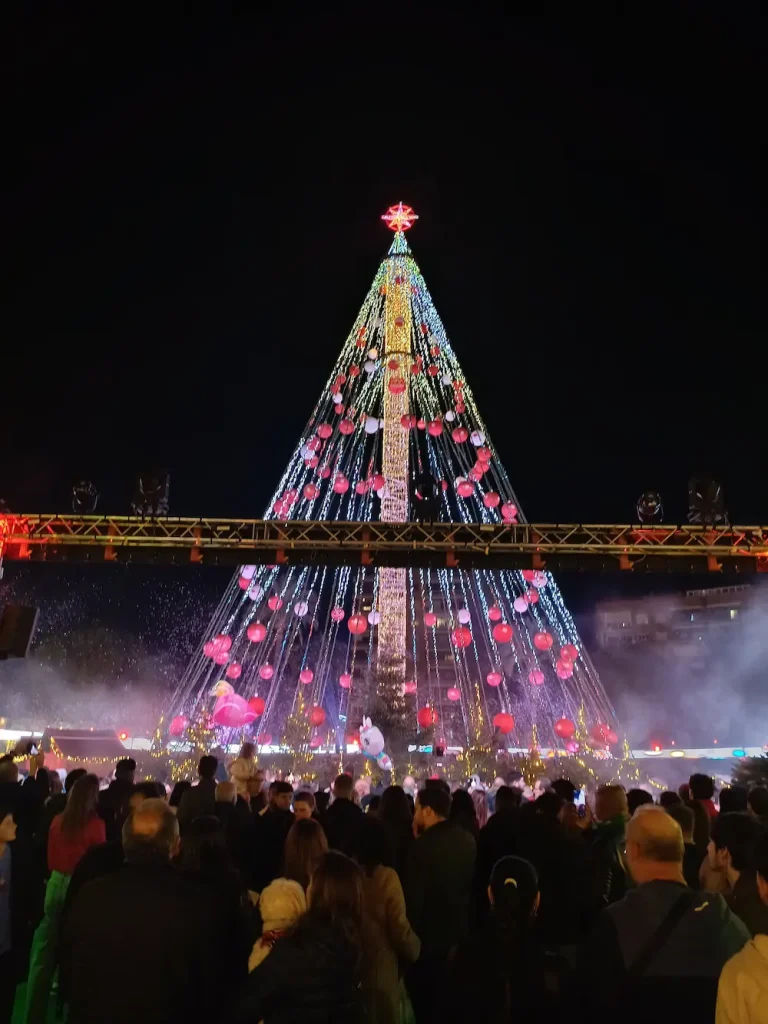
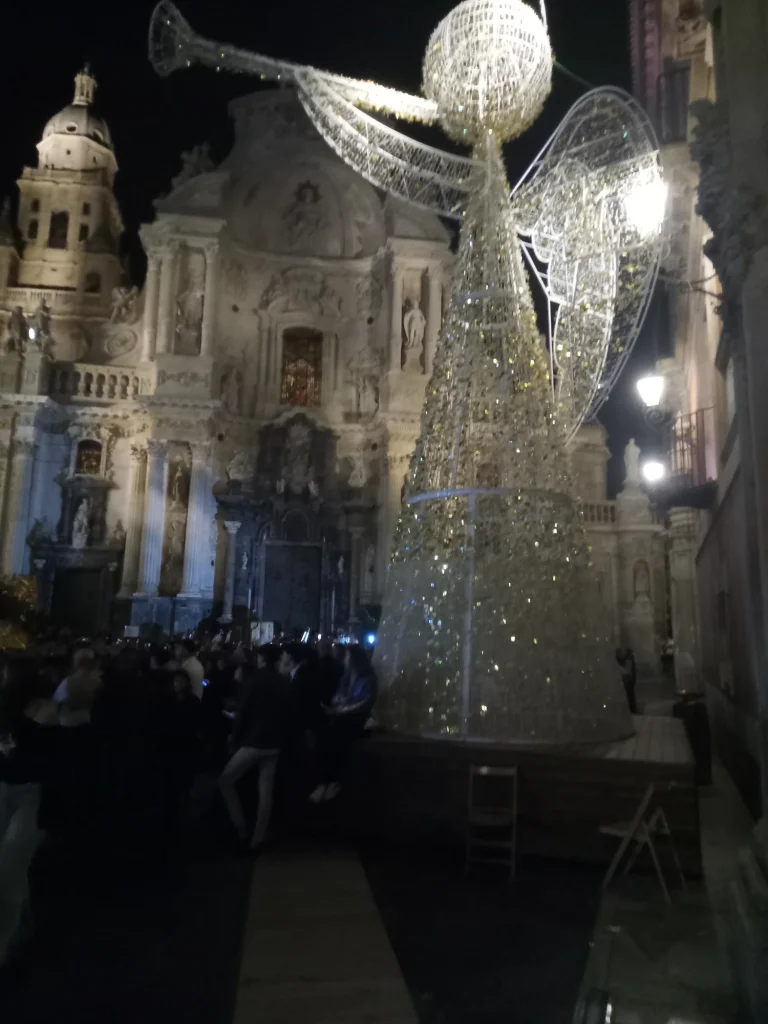
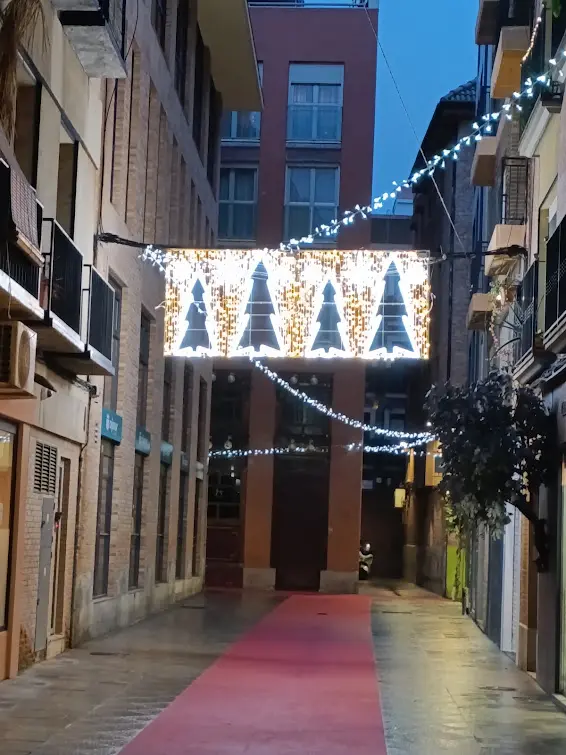
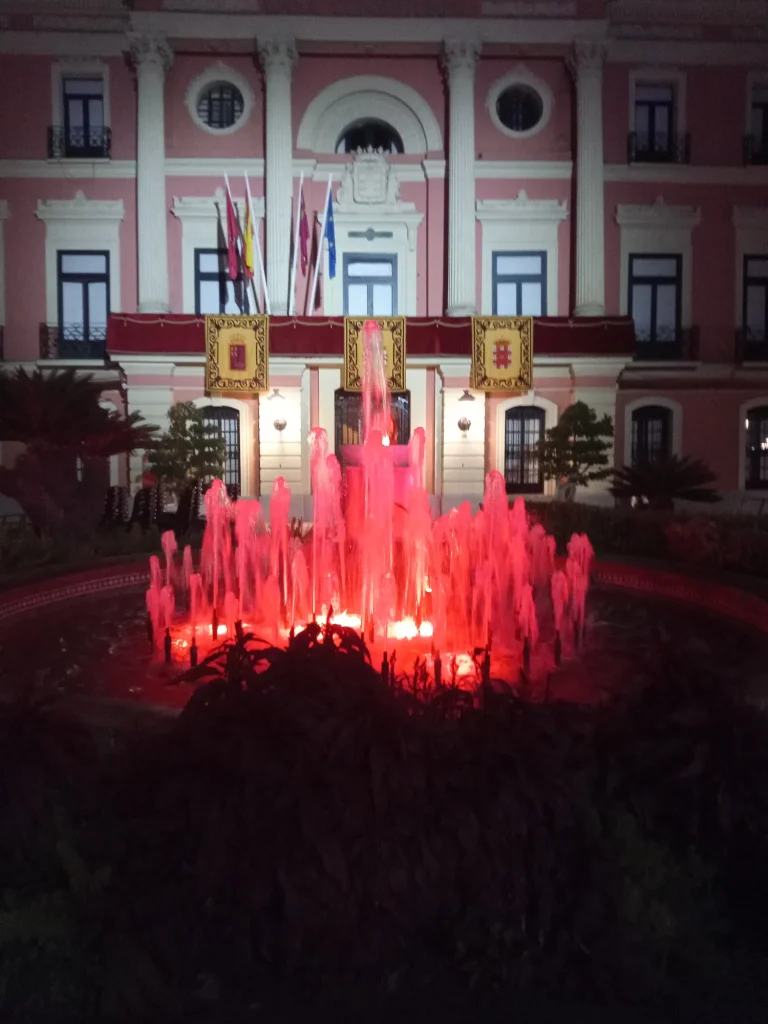
From mid-November the city lights up: the tree, the angel on Plaza de Belluga in front of the cathedral, and the whole centre worth walking after dark.
You eat standing and unhurried. Try michirones — dried broad beans stewed with chorizo and ham bone — the marinera, zarangollo and the anchovies. For pudding, paparajotes: lemon leaves battered and fried. You do not eat the leaf, though everyone tries once.
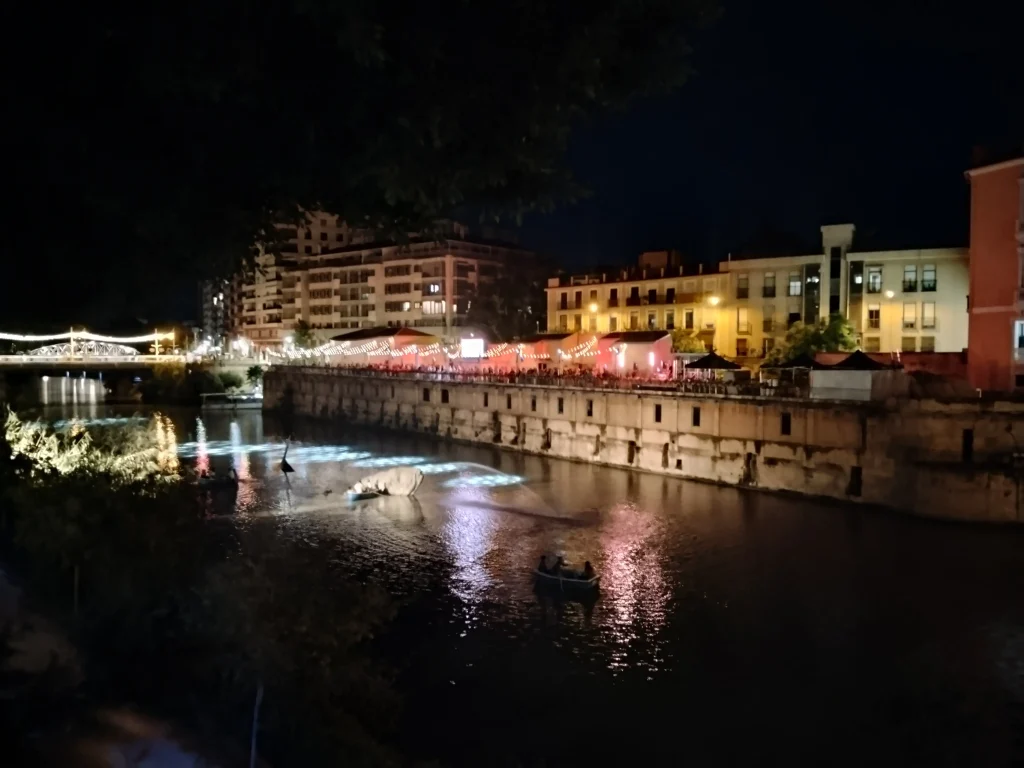
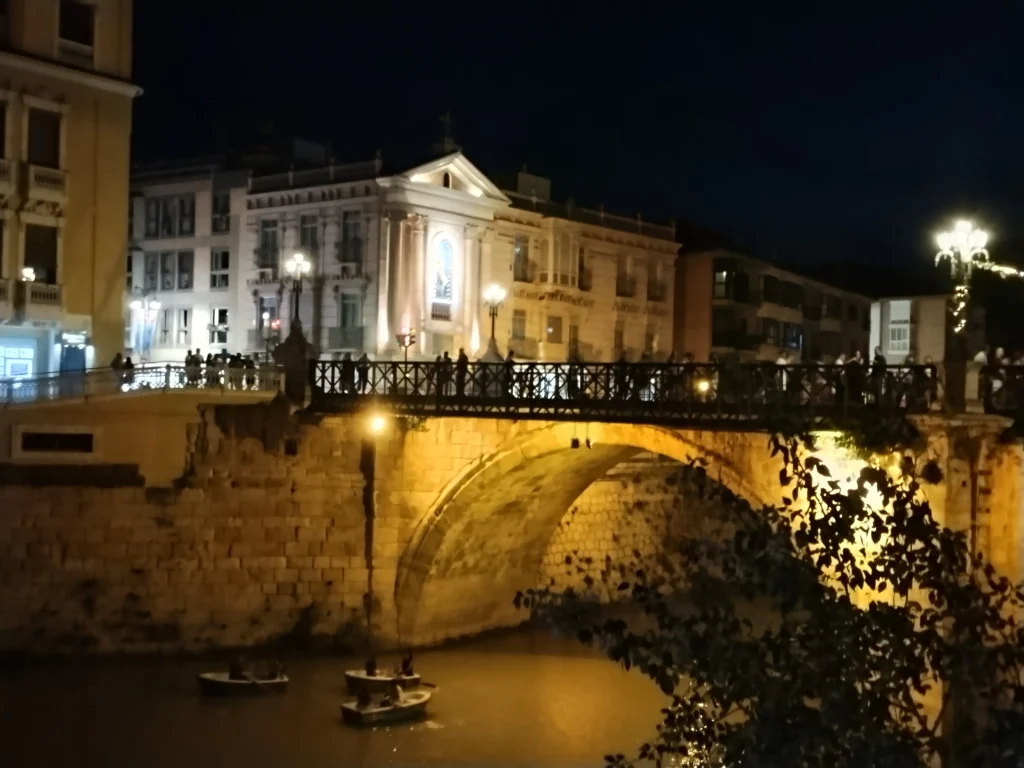
At night the city changes: the Puente Viejo lit above the Segura, the terraces along the water, and the riverside walk busy until late.
El Hondo, for the birds — 40 minutes
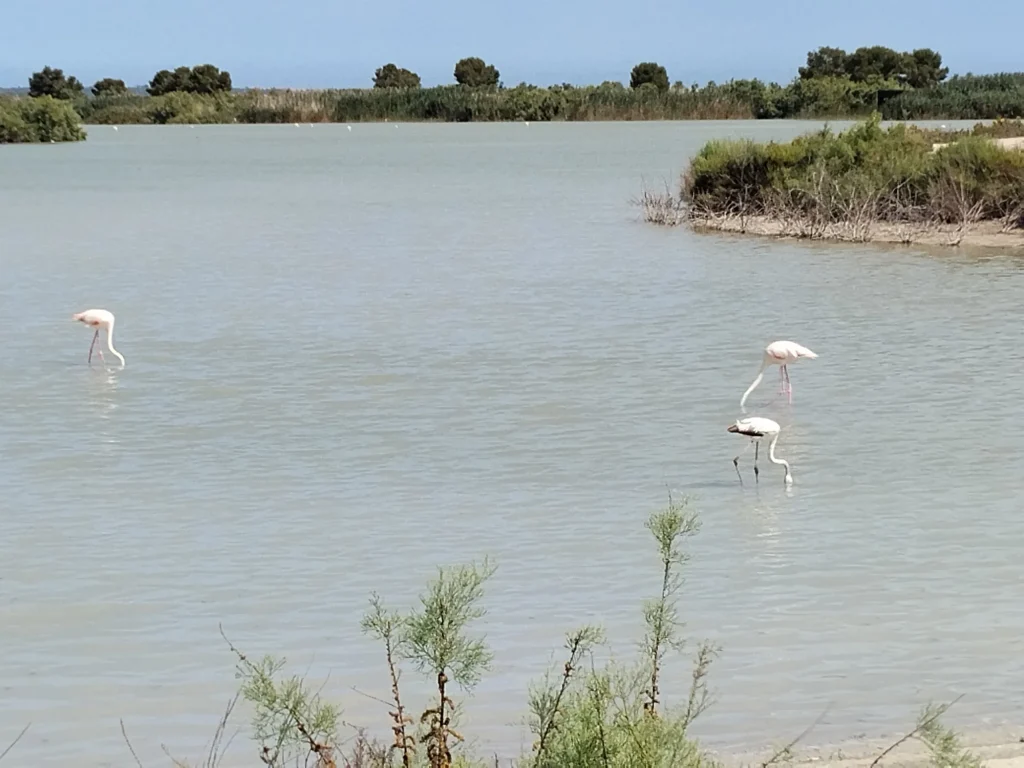
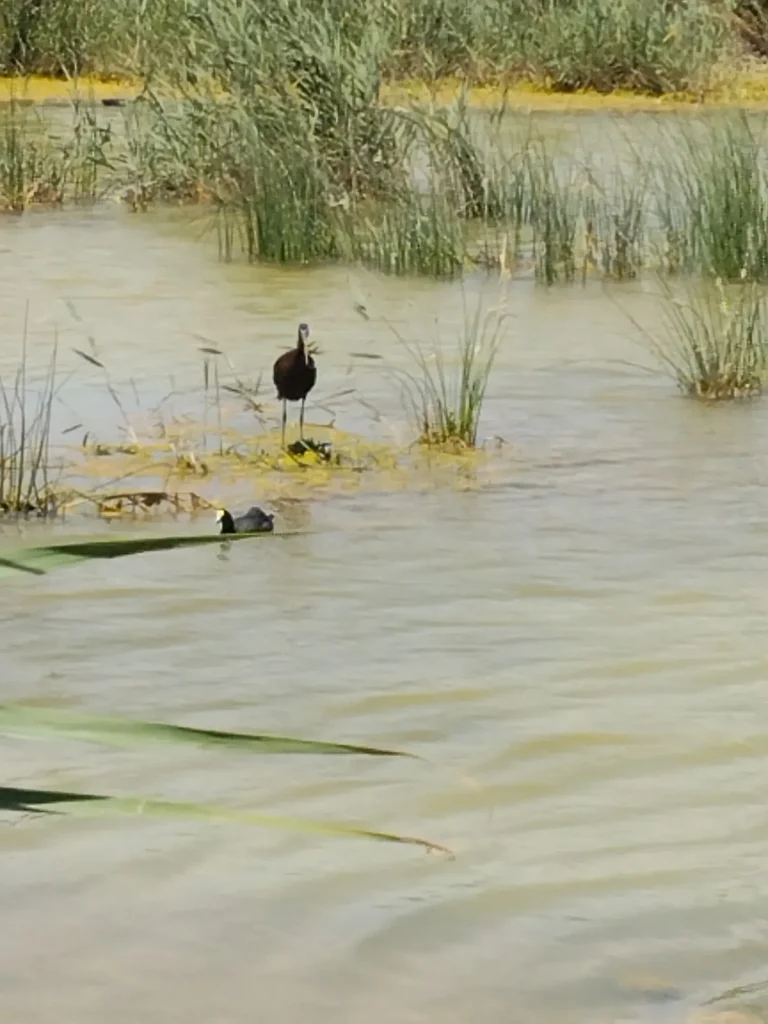
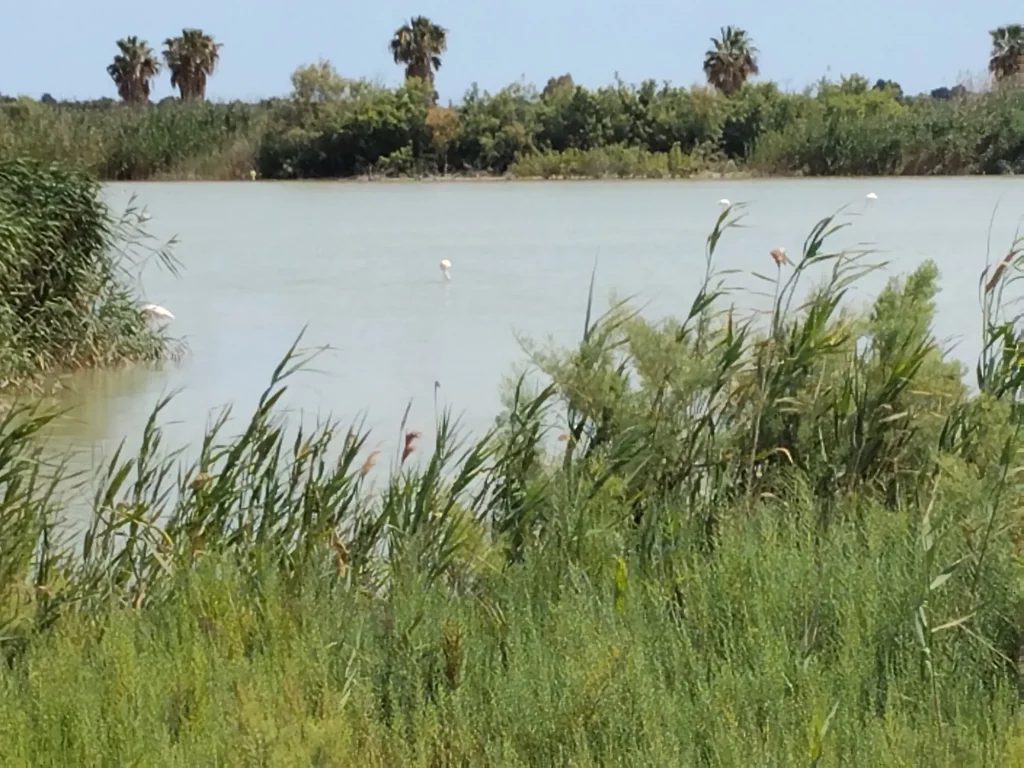
One of Spain’s most important wetlands, between Elche and Crevillente. Greater flamingos, glossy ibis, and the white-headed duck, a rare bird that breeds here. Wooden hides, a panel naming the species, and the best light at sunrise or sunset. Binoculars change everything.
The sea, fifty minutes away
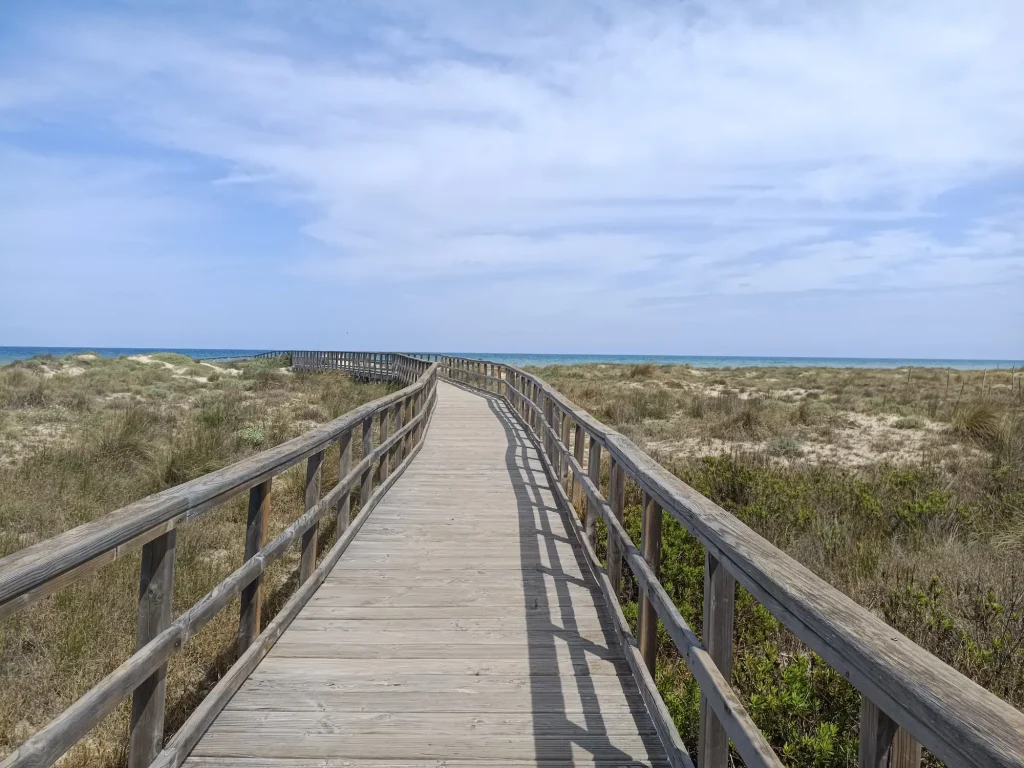
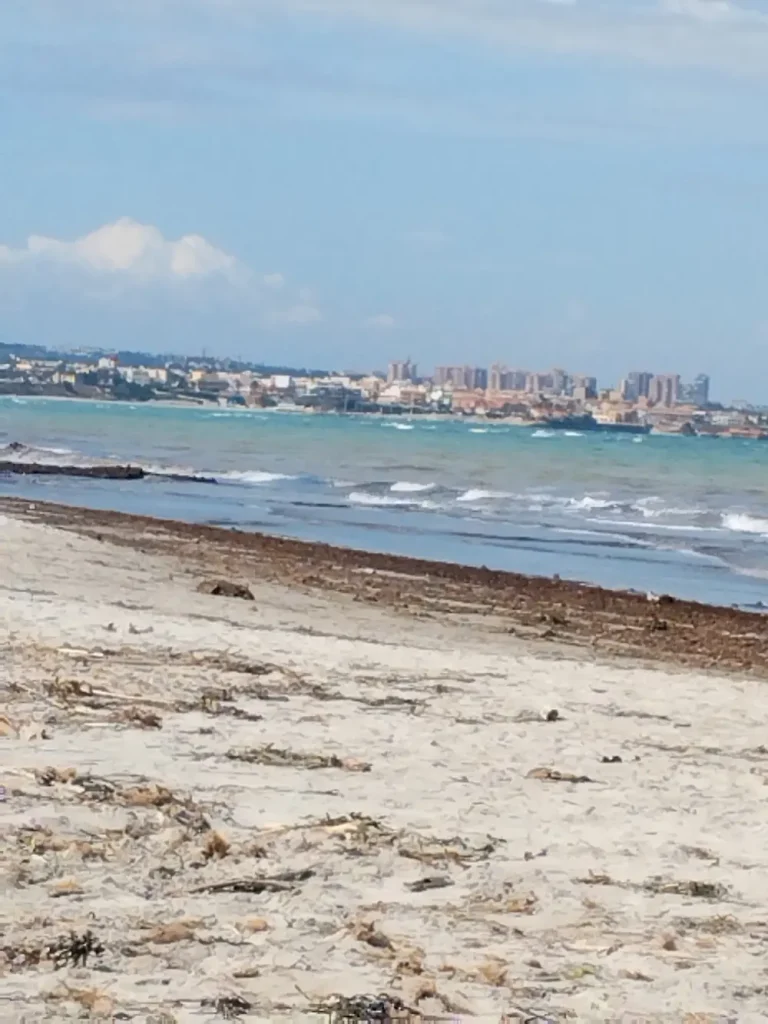
About fifty minutes to the beaches of the Costa Cálida and the Mar Menor, calm shallow water that suits children.
At San Pedro del Pinatar there are the salt pans: wooden boardwalks between the pools, flamingos and mud baths. Go in the morning, come back to sleep in the cool of the rock.
Wine, next door
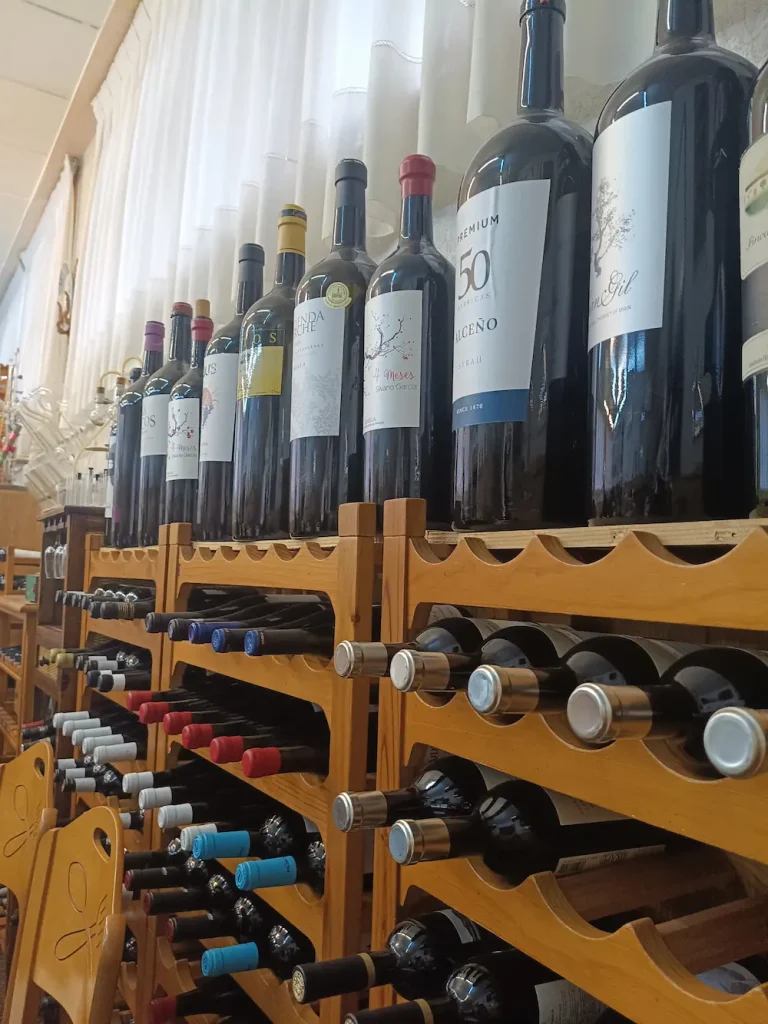
Jumilla is forty kilometres away: monastrell, wineries open to visitors, and a denomination that has stopped being a secret. The other way, a quarter of an hour off, the Alicante Wine Route begins at Pinoso. Two separate denominations half an hour apart, which is rare.
Caravaca de la Cruz, a holy city
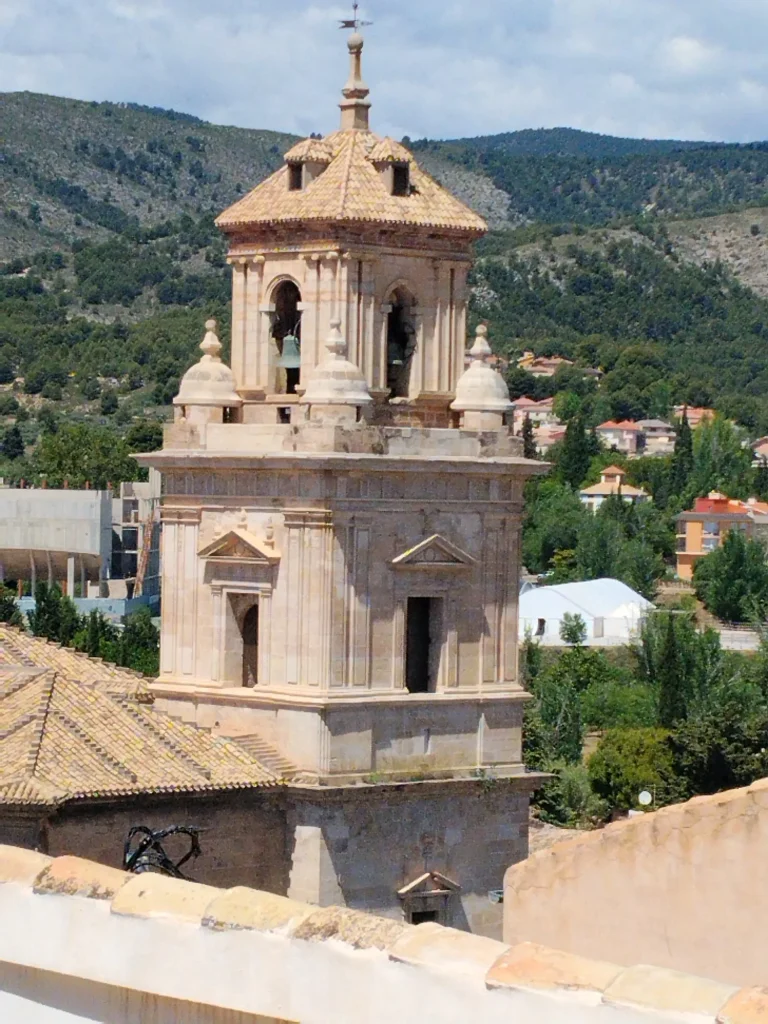
An hour and a half by car, and worth it. Caravaca is one of the five holy cities of Catholicism — with Rome, Jerusalem, Santiago de Compostela and Santo Toribio de Liébana — thanks to the perpetual jubilee granted by John Paul II in 1998. Every seven years it holds a Holy Year: the last was 2024, with 800,000 pilgrims. The next falls in 2031.
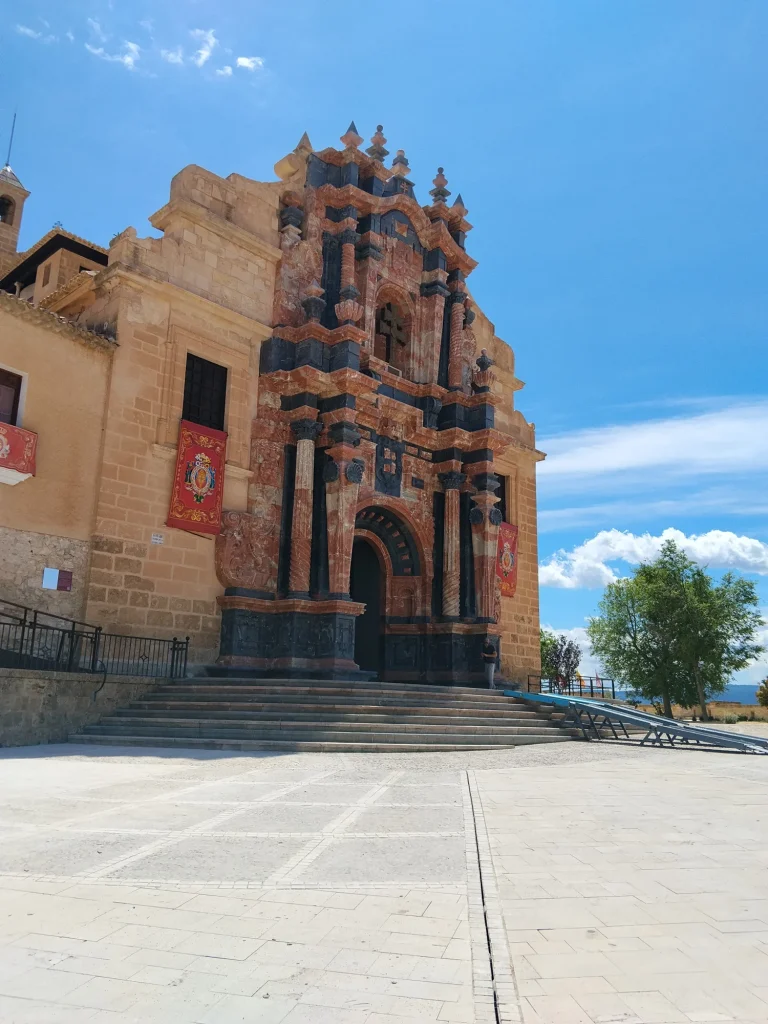
Outside those years the basilica of the Vera Cruz stays open, at the top of the town, with its red marble front. Inside is the relic that gives its name to the four-armed cross you see all over the Region, on doorways and on keyrings.
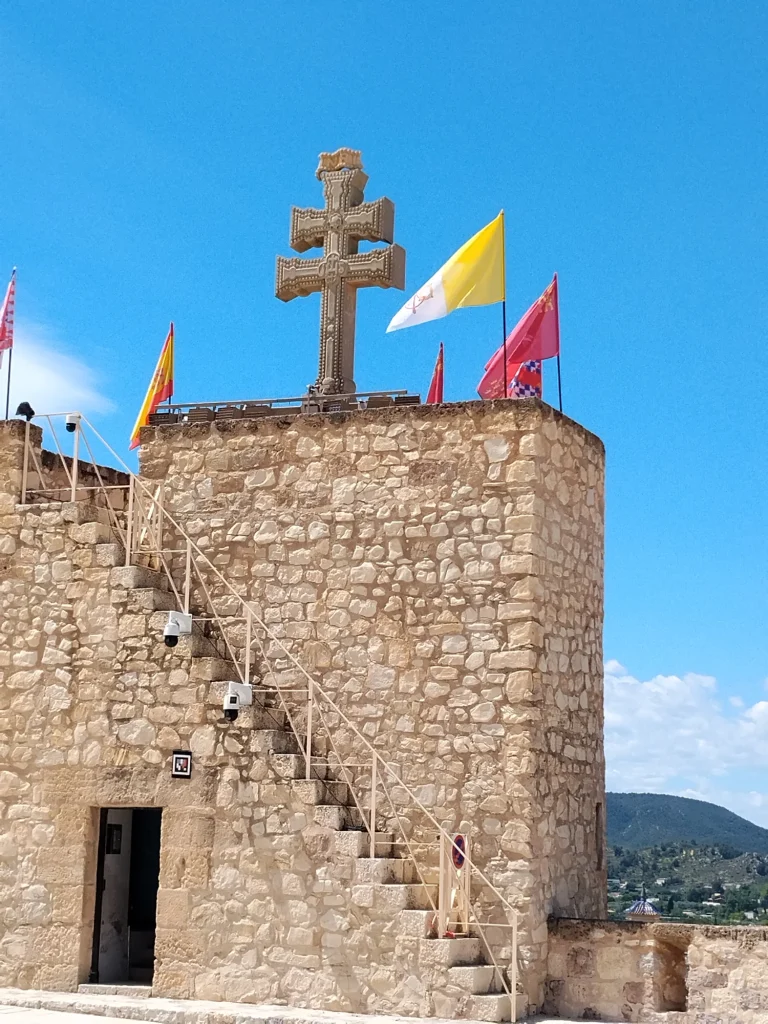
But if one date matters, it is 2 May: the Caballos del Vino, on UNESCO’s intangible cultural heritage list since 2020. Horses draped in hand-embroidered caparisons charge up to the castle, four men running pressed against them and never letting go. The climb lasts under a minute and takes a year to prepare. The festivities of the Santísima y Vera Cruz run from 1 to 5 May, with Moors and Christians.
If you come for those dates, book early: the town fills up.
Holy Week in Barinas
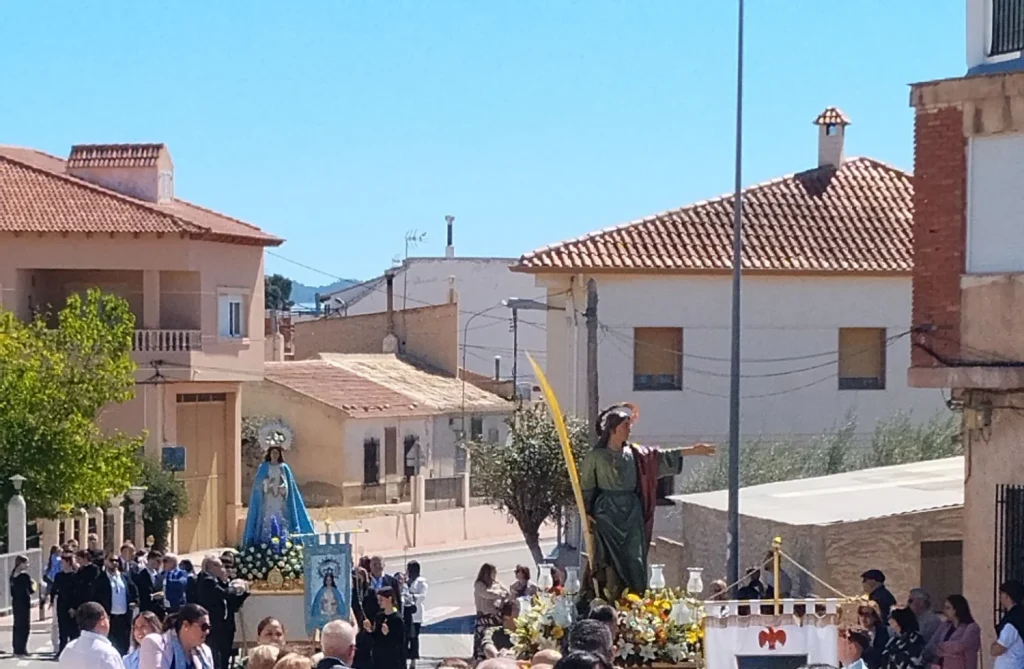
You do not have to go down to Murcia to see a procession. The village brings out its floats twice: on Palm Sunday, with the palms, and on Easter Sunday, with the risen Christ.
It is a village Holy Week — eight hundred inhabitants, one band, bearers you pass in the street the rest of the year. No stands, no paid seats, nothing to book: you watch from the pavement and end up talking to whoever is beside you.
It falls between late March and late April depending on the year. The procession works its way along the main street down in the village, loops round and ends at the church. It doesn’t pass the house: a footpath takes you down in five minutes.
Thirty-five kilometres away, Murcia’s Semana Santa is a Festival of International Tourist Interest, with its Salzillo floats. You can have both in the same week: the big one in the morning, the village one in the afternoon.
Market days
Tuesday in Barinas, Saturday in Fortuna and Pinoso, Sunday in Algueña. Between them, the week more or less plans itself. And in Fortuna they serve a parrillada in a basket: grilled cheese, cured sausage and meat, to share.

Where to stay
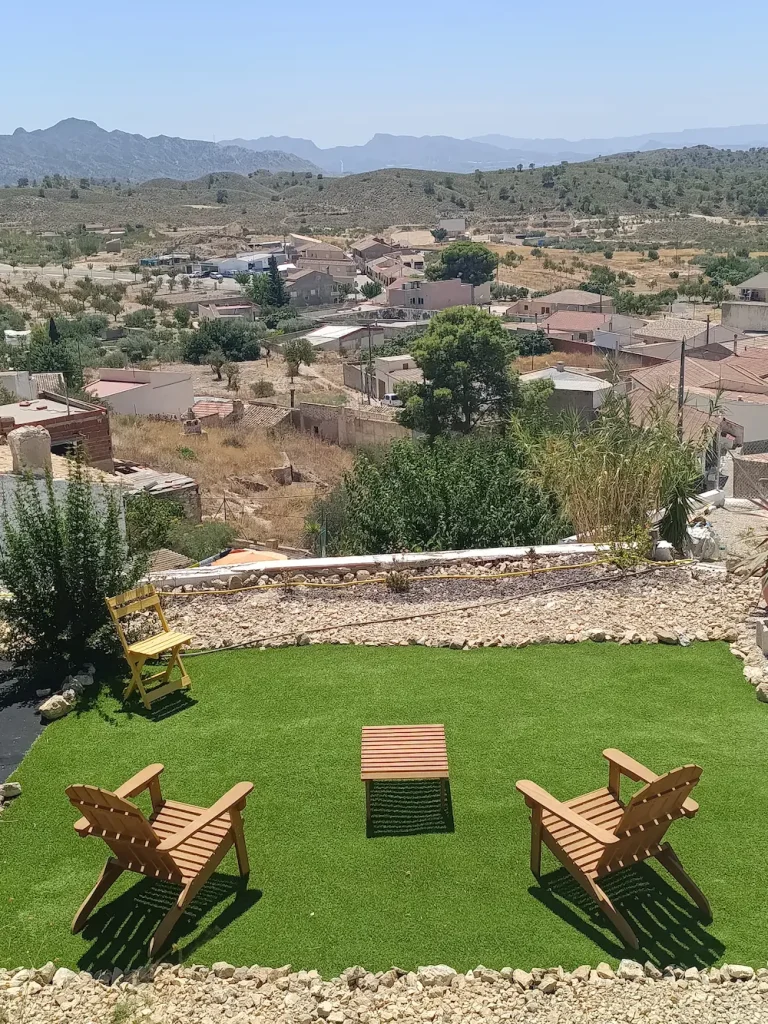
In Barinas, a hamlet of Abanilla, we rent a cave house with a private pool for four, high up above the village. The desert starts at the door and the river is ten minutes away.
Never slept inside a hillside? What a cave house is, and why it stays cool right through August.